The Pixelated Prison: why your Myopia is increasing (and how to patch it)
Listen, I can see you from here.
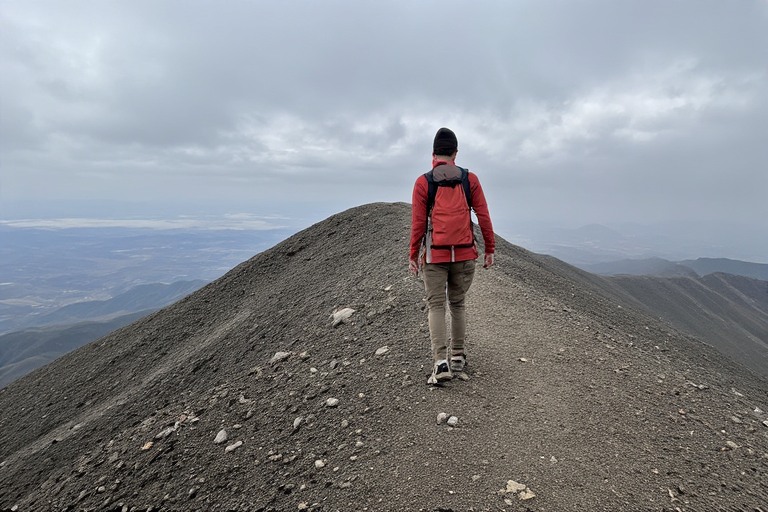
Well not literally. I’m currently three thousand meters above sea level, and unless you’re flying a very small, very lost drone, we aren’t making eye contact. But I can see you. I can see the blue-light glow reflecting off your retinas in that darkened room. I can see the way your shoulders are slowly migrating toward your ears, forming a permanent shrug of exhaustion. I can see the way your world has shrunk to the exact dimensions of a 27-inch 4K monitor.
Your vision is blurring, isn’t it? And I’m not just talking about the way the syntax highlighting starts to bleed into the background color after ten hours of debugging a race condition. I’m talking about your vision. Your ability to see the horizon of what’s possible.
Your myopia is increasing. And if you don’t patch this bug soon, you’re going to find yourself functionally blind to everything that matters outside of a pull request.
The Digital Cocoon
We’ve become an era of highly optimized, sedentary organisms. We call ourselves “high-achievers”, “engineers”, “architects”. We’ve built this incredible, hyper-efficient digital cocoon. Inside, everything is controlled. The lighting is consistent (usually a depressing dimness), the temperature is regulated by a smart thermostat, and our entire universe is compressed into a high-density pixel grid. It feels safe. It feels productive. It feels like we’re winning.
But there’s a side effect to this level of compression. When you spend 99% of your cognitive load staring at something thirty inches from your face, your brain begins to mirror your eyes. It starts to lose the ability to process depth. It loses the ability to understand scale. You start solving problems with “vibe-coding” logic: patching symptoms without ever seeing the systemic architecture because you’re too busy squinting at the individual lines of code.
You aren’t just losing your eyesight; you are losing your perspective. You are becoming a specialist in the micro, while the macro is passing you by.
The Great Shrinking
I remember when I realized I was part of this decay. I was sitting in my dream setup: the ergonomic chair that cost more than my first car, the triple-monitor array, the mechanical keyboard with the satisfying click. I had reached what I thought was the pinnacle of developer productivity.
But I felt… small. My thoughts were getting cramped. Every time I hit a complex architectural hurdle, my brain would just loop. The solution wouldn’t come in the shower or during a walk; it would only come when I stared harder at the screen. I was trying to force clarity through sheer visual pressure. It was like trying to fix a broken engine by staring at a single bolt with a magnifying glass.
I was becoming a victim of my own efficiency. I had optimized myself into a corner.
Then, I started walking.
Not “walking to the kitchen for more caffeine” walking. Not the “ten-minute movement break” that your wellness app sends you a guilt-tripped notification for, the kind of walk where you’re still checking Slack on your phone and technically still “at your desk”.
I mean walking. Moving through space. Engaging with a landscape that doesn’t have a refresh rate.
The Viking Patch: Architecture in Motion
This is where the movement begins. This is the core of what we call “Viking.”
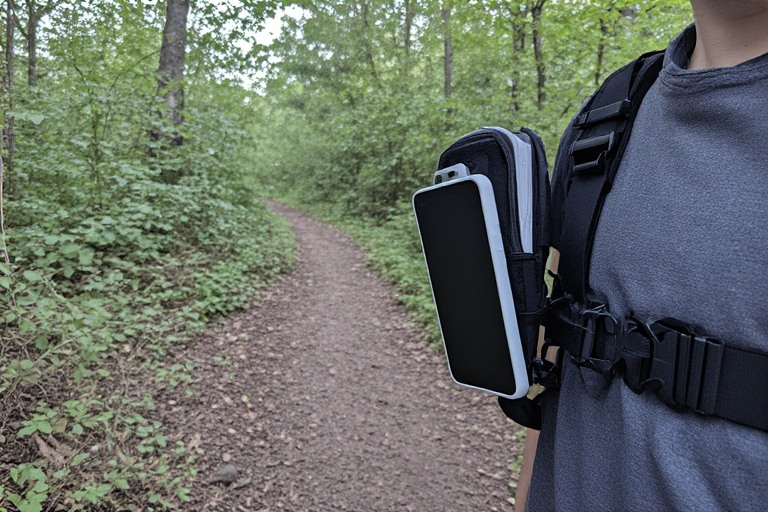
It’s not about being a rugged outdoorsman who hates technology. I love technology. I live for it. I want the fastest LLMs, the most seamless voice-to-code interfaces, and enough Starlink coverage to deploy a microservice from the middle of the Austrian Alps. But I realized that the logic of my work improved when my physicality expanded.
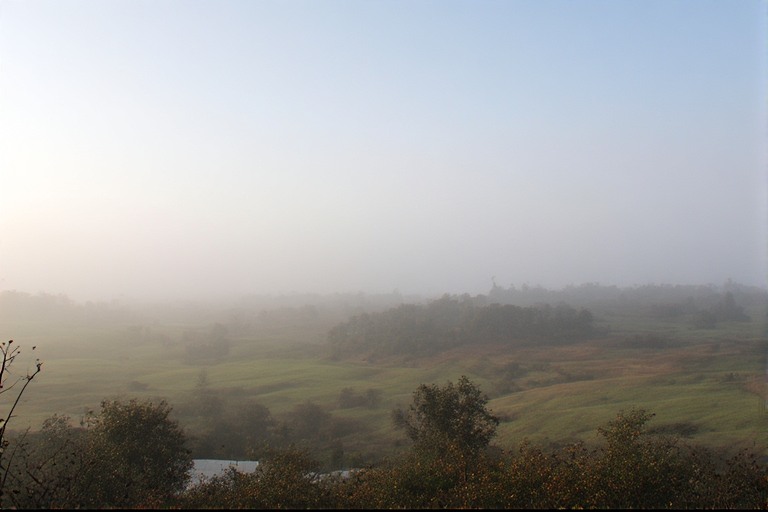
When you move, your eyes engage in panoramic vision. You aren’t just focusing on a single point of light: you are processing the horizon, the trees, the shifting shadows, the weather patterns. This isn’t just some hippie-dippie nonsense about “connecting with nature”, this is physiological optimization. When your visual field expands, your cognitive load decreases.