Still taking vitamin D every day? Go Viking.
I used to take 4,000 IU of vitamin D every morning. Little golden capsule, right next to my omega-3s and my magnesium and my ashwagandha and whatever other supplement some podcast bro convinced me I needed that month. I had a pill organizer. One of those weekly ones with the little flip lids. It sat on my kitchen counter between my espresso machine and my monitor stand, because of course my kitchen counter had a monitor stand on it. Where else was I going to take my 8am standup?
I was supplementing for a deficiency that I was actively, deliberately, choosing to maintain. Every single day. Swallowing a capsule to replace something that is literally falling from the sky for free, because going outside to get it would require me to stop working for an hour.
Read that again. I was paying money to compensate for the fact that I refused to go outside.
If that doesn’t make you want to throw your pill organizer out the window, I don’t know what will. But it gets worse, because I know I’m not alone. The vitamin D supplement market is worth over 2 billion dollars a year. Two billion. That is the price tag on an entire civilization that has decided it would rather swallow sunshine in capsule form than walk out the front door.
We have turned sunlight into a subscription service.
And look, I get it. I’m not some off-grid wellness guru who’s going to tell you that Big Pharma invented vitamin D deficiency to sell you pills. The deficiency is real. Something like 42% of American adults are vitamin D deficient. That’s not a made-up number. It’s a genuine public health problem with real consequences: weakened bones, compromised immune function, increased risk of depression, fatigue, poor sleep. The science is solid.
But here’s what drives me crazy. The conversation around vitamin D deficiency is always about the supplement. Never about the behavior that created the deficiency in the first place. We treat the symptom and ignore the disease. The disease is not “low vitamin D.” The disease is that we live indoors.
Before I went Viking, my daily sun exposure was roughly the amount you get walking from your front door to your car. Maybe fifteen minutes total, split across tiny fragments. Morning coffee on the porch if the weather was nice. A lunch run to pick up food. The walk from the parking lot to the grocery store. That’s it. That was my entire relationship with the sun. The thing that powers all life on earth, and I was experiencing it in ninety-second intervals between climate-controlled boxes.
Now I spend four to six hours outside every day. Not on vacation. Not on weekends. On a Tuesday. On a Thursday. While working. My vitamin D levels went from 22 ng/mL to 58 ng/mL in about four months. I didn’t change my supplement routine. I just went outside.
Actually, that’s not true. I did change my supplement routine. I stopped taking vitamin D entirely. Haven’t bought a bottle in over a year. My levels are better now than they ever were on supplements.
But vitamin D is just the headline. It’s the easy, measurable, “look at my bloodwork” part of the story. The stuff you can’t measure is bigger.
My sleep improved in ways that no supplement ever touched. Not because of vitamin D specifically, but because morning sunlight exposure resets your circadian rhythm in ways that a capsule cannot. There is no pill for “your body knowing what time it is.” That information comes from photons hitting your retinas before 10am. You either get it or you don’t, and if you’re indoors until noon, you don’t.
My mood stabilized. Not from bad to good, but from “randomly-anxious-for-no-reason-at-3pm to consistently fine. Turns out that spending your entire day in artificial light under a ceiling does things to your brain chemistry that we’re only starting to understand. We spent 300,000 years evolving under an open sky. We’ve spent about 50 years staring at drop ceilings and wondering why everyone’s on SSRIs.
My energy stopped crashing at 2pm. You know the afternoon slump? The one that coffee doesn’t fix and that your standing desk doesn’t fix and that your quick walk around the block doesn’t fix? Try spending the morning actually outside, in real light, moving, and see if the slump still shows up. Spoiler: it doesn’t. Because the slump was never about energy. It was about your body running on the wrong clock.
I’m not a doctor. I say this every time and I mean it. I don’t know your medical history, your latitude, your skin type, your specific situation. Some people genuinely need to supplement vitamin D and should keep doing it. If your doctor told you to take it, take it.
But if you’re a developer sitting in a dark room for ten hours a day, popping vitamin D because a blood test told you you’re deficient, and you’ve never once questioned why you’re deficient, then I have a suggestion.
Close the bottle. Open the door.
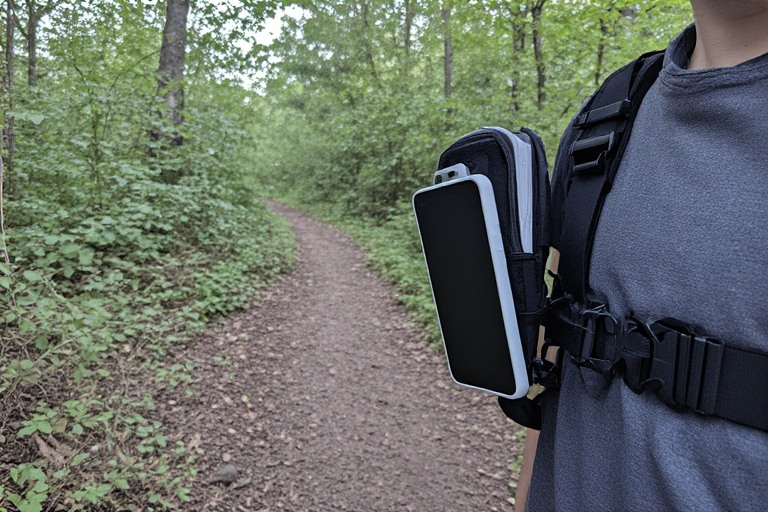
You don’t need to go full Viking on day one. You don’t need a chest mount and a trail and an AI coworker in your ear. You just need to take your work outside for an hour and notice how different your body feels when it gets what it was designed to get. Light. Air. Movement. The holy trinity that no supplement stack can replace, no matter how many podcasters tell you otherwise.
Your body is not broken, it’s not deficient. It’s just indoors.
Still taking vitamin D every day? Get Viking. The sun doesn’t charge a subscription.