What are YOU even doing when Claude is Clauding?
There’s a question I’ve been asking every developer I meet, and the answers are depressing.
“What do you do while your AI is generating code?”
The most common answer, by far, is nothing. Or rather: the modern nothing. Check Slack. Scroll Twitter. Open a new tab, forget why, close it, open it again. Stare at the bouncing Claude logo like it’s a slot machine that owes you money. Maybe get up for coffee. Sit back down. Refresh. Still generating. Check phone. Put phone down. Pick phone up again.
If this is you, I need you to hear something: you have been given the most radical gift in the history of knowledge work, and you are spending it on your phone’s lock screen.
Let me say it differently.
Before AI coding tools, you wrote every line yourself. Your brain was the bottleneck at every stage: architecture, implementation, debugging, testing, documentation. There was no gap between thinking and doing because you were doing all of it, all the time, with your hands on the keyboard.
Now there are gaps. Beautiful, precious, recurrent gaps. You prompt, and then the machine works for thirty seconds. A minute. Sometimes five minutes. These gaps add up to hours every single day. Hours that did not exist before. Hours that appeared out of thin air because a machine took over the mechanical part of your job.
And the collective response of our industry has been to fill those hours with Twitter.
Here’s what I think most people get wrong about AI productivity. The conversation is always framed as a multiplier. “10x developer.” “Ship in a weekend what used to take a month.” “Build faster, ship more, do everything at 5x speed.” And sure, you can do that. You can use every second of AI-generated free time to prompt more, ship more, grind more. You can turn yourself into a coding factory that never stops feeding the machine.

Or. And hear me out. You could do something else with that time.
Not nothing. Something.
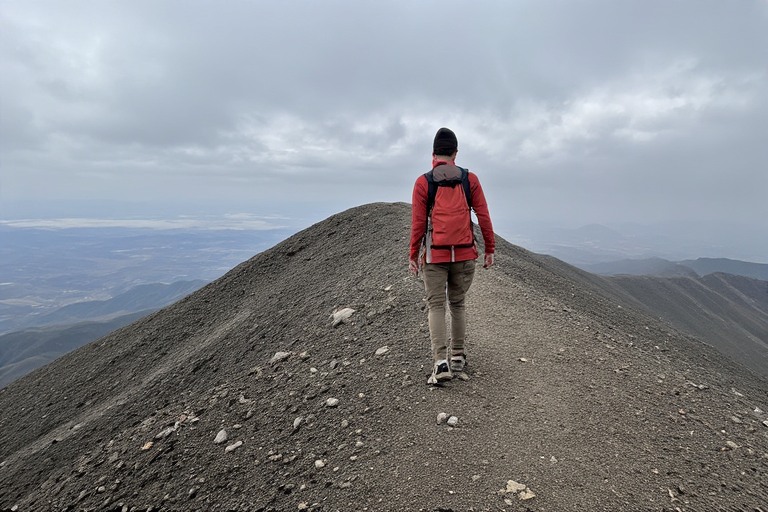
When Claude is Clauding, I’m walking. Literally. I’m on a trail, moving my legs, breathing air that doesn’t come from an HVAC system. But the walking isn’t the point. The point is what happens in my head when I stop typing and start moving.
I think about the next thing. Not the current function, not the bug I just described to Claude, but the layer above. Where is this product going? What does the user actually need? Is this feature even worth building, or am I solving a problem nobody has? Is the architecture going to hold when we scale, or am I building a house of cards that looks fine at demo day and collapses under real traffic?
This is the kind of thinking that never happens at a desk. Not because desks are evil, but because desks are where you do. And doing crowds out thinking every single time. Your IDE is right there. Slack is right there. The next ticket is right there. The bias toward action is so strong that the moment you have a free minute, you fill it with another task instead of asking whether the task even matters.
The gap that AI creates is the feature, not the bug.
It’s the first time in the history of programming that the machine says “hold on, let me work on this for a minute” and you get to step back and be the architect instead of the bricklayer. You get to be the person who decides what to build instead of the person who builds it. That’s not a downgrade. That’s the promotion you’ve been waiting for.
But you have to actually take it. You have to physically, deliberately step away from the screen when the spinner starts spinning. Because if you stay in the chair, you will check Slack. You will. It’s not a willpower problem, it’s an environment problem. The chair is surrounded by distractions. The trail is not (except if you’re into nightingales and wild foxes).
I’m not saying you need to go Viking (I mean, you should. But that’s a different article). I’m saying you need to have an answer to the question. A real answer. Not “I wait.” Not “I check my phone.” Something intentional.
Some options, ranked by how much they’ll change your life:
- Go for a walk. Think about your product. Come back with clarity you can’t get from a screen. This is the Viking way and I’m obviously biased, but the results speak for themselves.
- Do pushups. I’m serious. Twenty pushups every time Claude runs for more than thirty seconds. Do the math on how many that is per day. You’ll be in the best shape of your career by Q3.
- Read. Not Twitter threads. An actual book. Even five pages at a time. You’ll finish a book a week at the rate Claude generates code.
- Sketch on paper. Draw the user flow. Draw the system diagram. Draw something with your hands that forces your brain to think spatially instead of linearly.
- Call a friend. A real one, not a Slack thread. Thirty seconds of human connection between prompts will do more for your mental health than any meditation app.
- Or just sit there and think. No input. No screen. Just your brain doing what it was designed to do before we buried it under notifications.
The point is not productivity. I know that’s heresy in this industry, but the point is genuinely not to squeeze more output from your day. The point is that AI has handed you back hours of your life that used to belong to the compiler, and you get to choose what to do with them. You can feed them back into the machine, or you can use them to become a healthier, sharper, more thoughtful version of yourself.
Stop watching your token count. Watch your steps instead.
Or your pushup count. Or your page count. Or the number of times you looked at the sky today and remembered that it exists.
Claude is Clauding. The question is whether you’re just waiting, or whether you’re living.